



Transgender Ex-Student Case: Haryana Panel Seeks Answers, Family Levels ‘Indoctrination’ Allegations
 Staff@THS


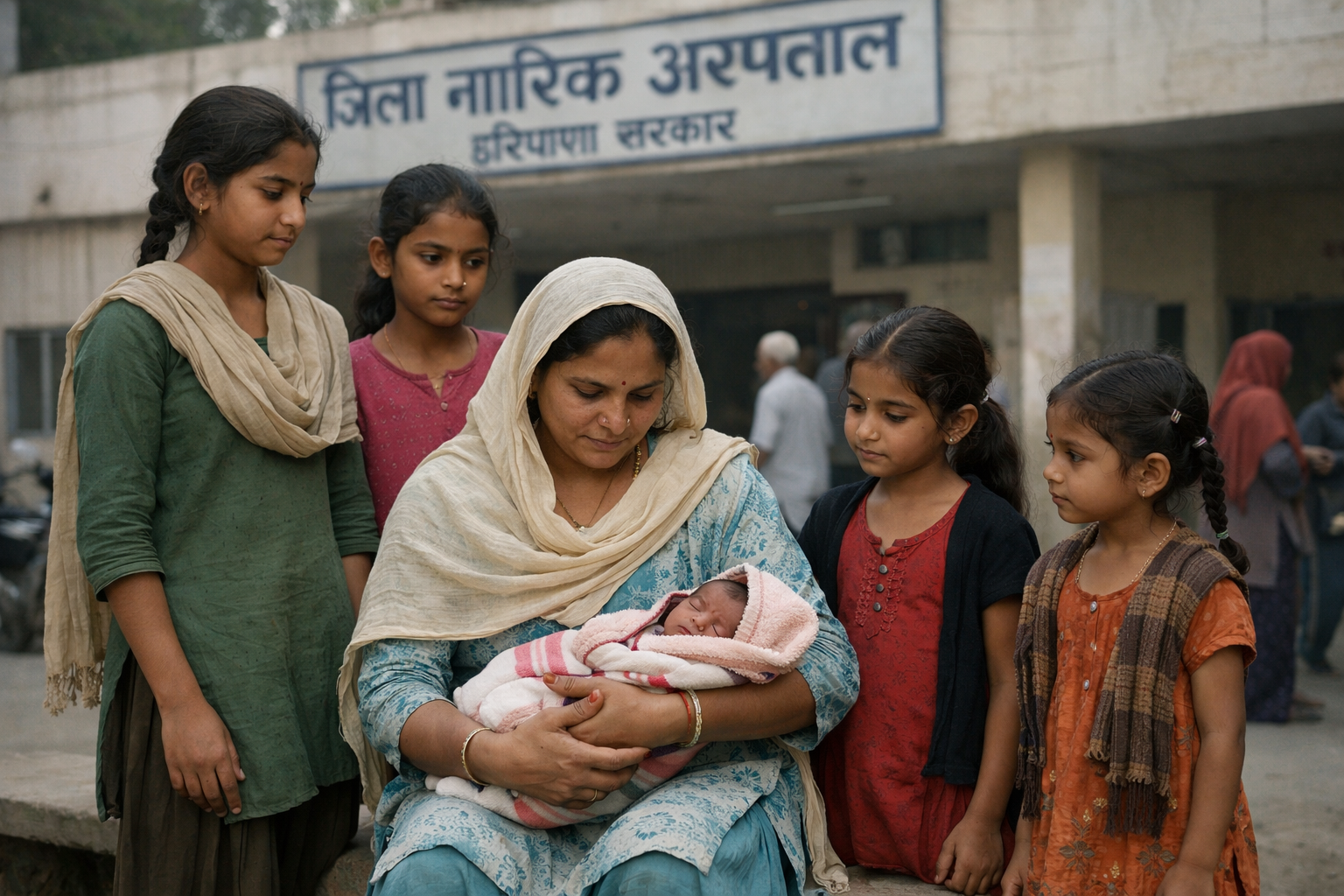
In a second similar incident within just two weeks, a woman from Uchana Kalan in Jind district has given birth to a boy after having nine daughters, once again bringing the issue of deep-rooted son preference into focus.
Ritu, who was married 24 years ago to Surender, a daily-wage earner, was admitted to the Jind Civil Hospital on Sunday, where she delivered a baby boy. Speaking to the media, Ritu said this was her 11th delivery, as one of her daughters had died shortly after birth. She added that she was happy with the birth of a son and would not plan any more children.
The couple’s eldest daughter, aged 22, has already been married. While Ritu said her eldest child is illiterate, the remaining daughters are currently studying in school. Both Ritu and her husband are illiterate and survive on daily wages.
Explaining the reason for repeated pregnancies, Ritu said the decision was taken collectively by the family. “My daughters needed a brother to perform certain rituals,” she said, adding that relatives had been congratulating the family after the birth of the boy.
The case has also drawn attention to the symbolism behind the naming of some of her daughters. Two of them are named Kaafi (“enough”) and Maafi (“apology”). Asked about this, Ritu said the family had grown tired of searching for names for girls and hoped that naming them so would lead to the birth of a son.
The incident comes close on the heels of another case reported on January 5, when Sunita, a resident of Dhani Bhojraj village in Fatehabad, delivered a baby boy after giving birth to 10 daughters over 19 years of marriage. Doctors had termed Sunita’s delivery high-risk due to severe anaemia.
Health experts say such repeated pregnancies pose serious risks to women’s health and underline the urgent need for awareness on family planning, gender equality and maternal healthcare.
Staff@THS
 Staff@THS
 Staff@THS
 Staff@THS