


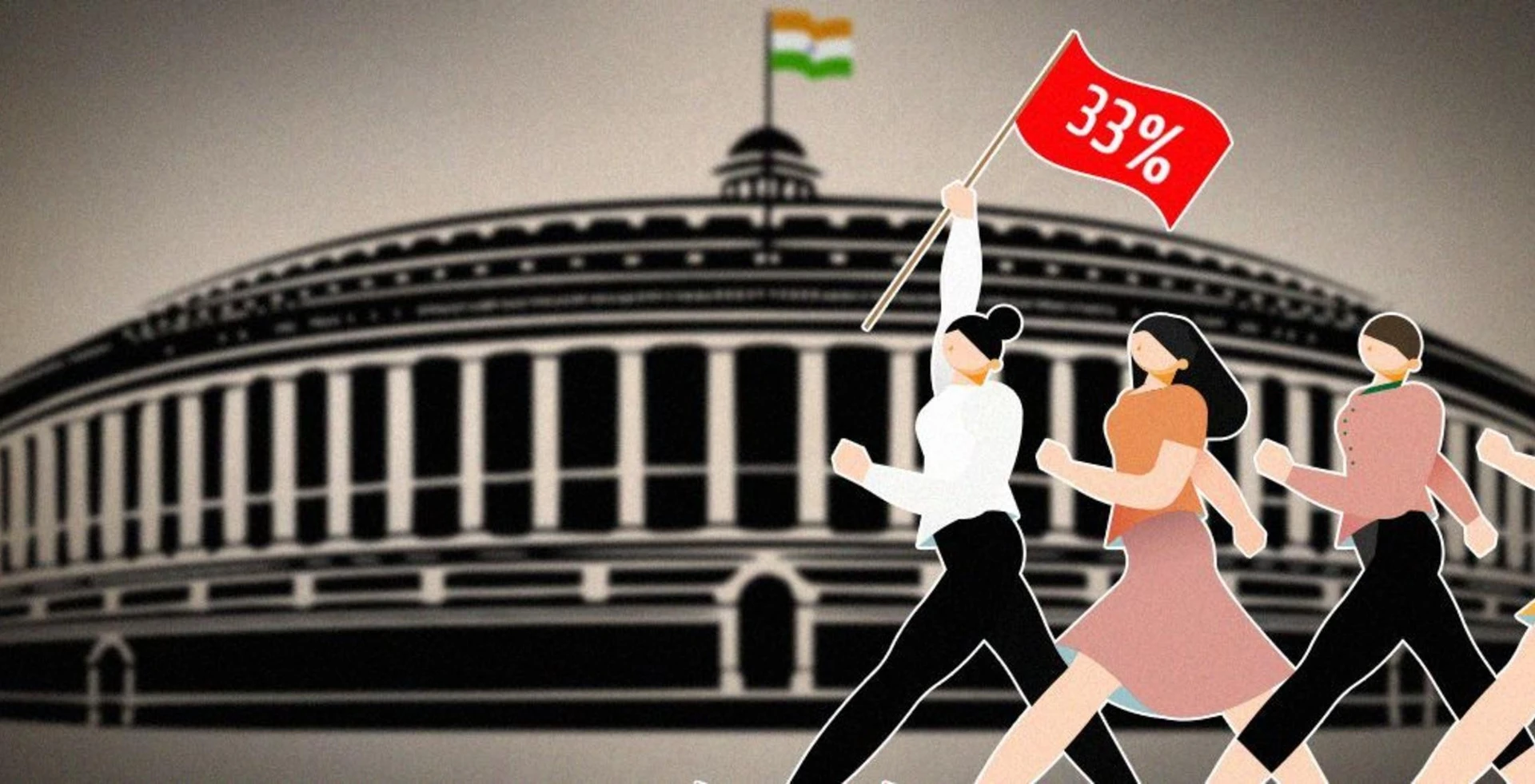
Centre Plans Fast-Track Implementation of Women’s Quota, Parliament Session May Be Extended
 Staff@THS



India’s education reforms under the leadership of Prime Minister Narendra Modi represent not incremental change but structural transformation. The National Education Policy 2020 is a decisive break from legacy thinking and a clear statement of intent that India’s future competitiveness social equity and technological sovereignty will be built from the ground up beginning at age three.
For the first time in independent India three years of pre school education Balvatika has been formally recognised as a continuum of schooling within the five plus three plus three plus four structure. The foundational stage now spans ages three to eight integrating pre school with Grades One and Two. This is not a cosmetic reform. It reflects a deep understanding of cognitive science child development and long term learning outcomes. Nations that lead in innovation invest earliest in learning. India has now chosen that path with clarity.
To translate policy into outcomes the Modi government launched the NIPUN Bharat Mission in July 2021 a national mission to ensure universal foundational literacy and numeracy by the end of Grade Two. Implemented across all thirty six States and Union Territories under Samagra Shiksha NIPUN Bharat is backed by concrete financial and institutional support including teacher capacity building innovative teaching learning materials independent assessments and dedicated project management units at state and district levels. This is governance that is execution oriented not announcement driven.
Equally significant is the integration of Anganwadi centres into the formal education ecosystem. With nearly three lakh Anganwadi centres now co located with schools offering Grade One early childhood care and education is being universalised with quality and proximity. The inclusion of Balvatika students under PM POSHAN further strengthens nutrition learning outcomes recognising that education policy cannot succeed in isolation from health and wellbeing.
Curriculum reform has kept pace with institutional reform. The National Curricular Framework for the Foundational Stage released in October 2022 is India’s first integrated curriculum for children aged three to eight. The Vidya Pravesh programme now benefiting over four point two crore children ensures that every child irrespective of background enters Grade One with confidence readiness and continuity. This is inclusion not as rhetoric but as design.
Language policy under NEP 2020 reflects the same maturity. The three language formula continues but with flexibility choice and constitutional sensitivity. No language is imposed. Multilingualism is promoted not as a political statement but as an educational and cognitive advantage. Teaching in the home language or regional language up to at least Class Five and preferably Class Eight recognises evidence that children learn best in languages they understand deeply.
The follow through has been extensive. NCERT textbooks are now available in twenty two scheduled languages. Foundational learning primers have been developed in one hundred twenty one local languages. Programmes such as Bhasha Sangam Rashtriya e Pustakalaya PM e Vidya and Jaadui Pitara along with its digital and artificial intelligence enabled extensions ensure that language technology and access reinforce one another rather than compete. The Central Board of Secondary Education notification allowing home or regional language as the medium of instruction at early stages further institutionalises this shift.
Assessment reform completes the picture. By introducing two board examinations in Class Ten from 2026 the Central Board of Secondary Education is aligning evaluation with the core philosophy of the National Education Policy 2020 reducing high pressure examinations promoting flexibility and shifting focus from rote memorisation to competency based learning. This is essential preparation for a world defined by problem solving adaptability and lifelong learning.
Taken together these reforms are not isolated initiatives. They represent a coherent national strategy to build strong cognitive foundations early teach in languages children understand assess meaningfully and scale quality through technology. This strategy has direct implications for India’s future in artificial intelligence and digital sovereignty.
Artificial intelligence sovereignty cannot be built only through advanced research labs or imported models. It depends on a population that is literate early numerate early multilingual and comfortable with technology from the foundational stage. The Modi government has already laid critical groundwork through artificial intelligence enabled educational tools multilingual digital platforms and nationwide access infrastructure. The next phase must deepen this trajectory.
India must systematically align foundational education data language resources and curriculum frameworks with indigenous artificial intelligence development. Multilingual datasets generated through initiatives such as e Jaadui Pitara Bhasha Sangam and Rashtriya e Pustakalaya should be strategically leveraged to train Indian artificial intelligence systems in Indian languages. Teacher capacity building programmes should progressively include artificial intelligence literacy not as a separate subject but as an embedded skill. State level project management units can evolve into data informed education innovation hubs feeding real world learning insights into policy and technology design.
What is equally important is policy continuity and institutional patience. Foundational reforms take time to show results but they compound over decades. The Modi government has shown the political will to invest where returns are long term and transformational. As a nation we must now ensure sustained implementation cooperative federalism and continuous feedback loops between classrooms policymakers and technologists.
India’s aspiration to be a knowledge superpower and an artificial intelligence leader will not be realised through shortcuts. It will be realised through exactly the kind of foundational inclusive language sensitive and future ready education reforms that are currently underway. The direction is correct. The architecture is strong. The task ahead is to accelerate integrate and deepen so that every Indian child becomes a confident learner and India emerges as a sovereign force in the global knowledge and artificial intelligence economy.
Staff@THS
 Staff@THS
 Staff@THS
 Staff@THS