


Hisar Airport Takes Off: 1,000+ Flights in a Year, Ahmedabad & Jammu Routes Likely Soon
 Staff@THS


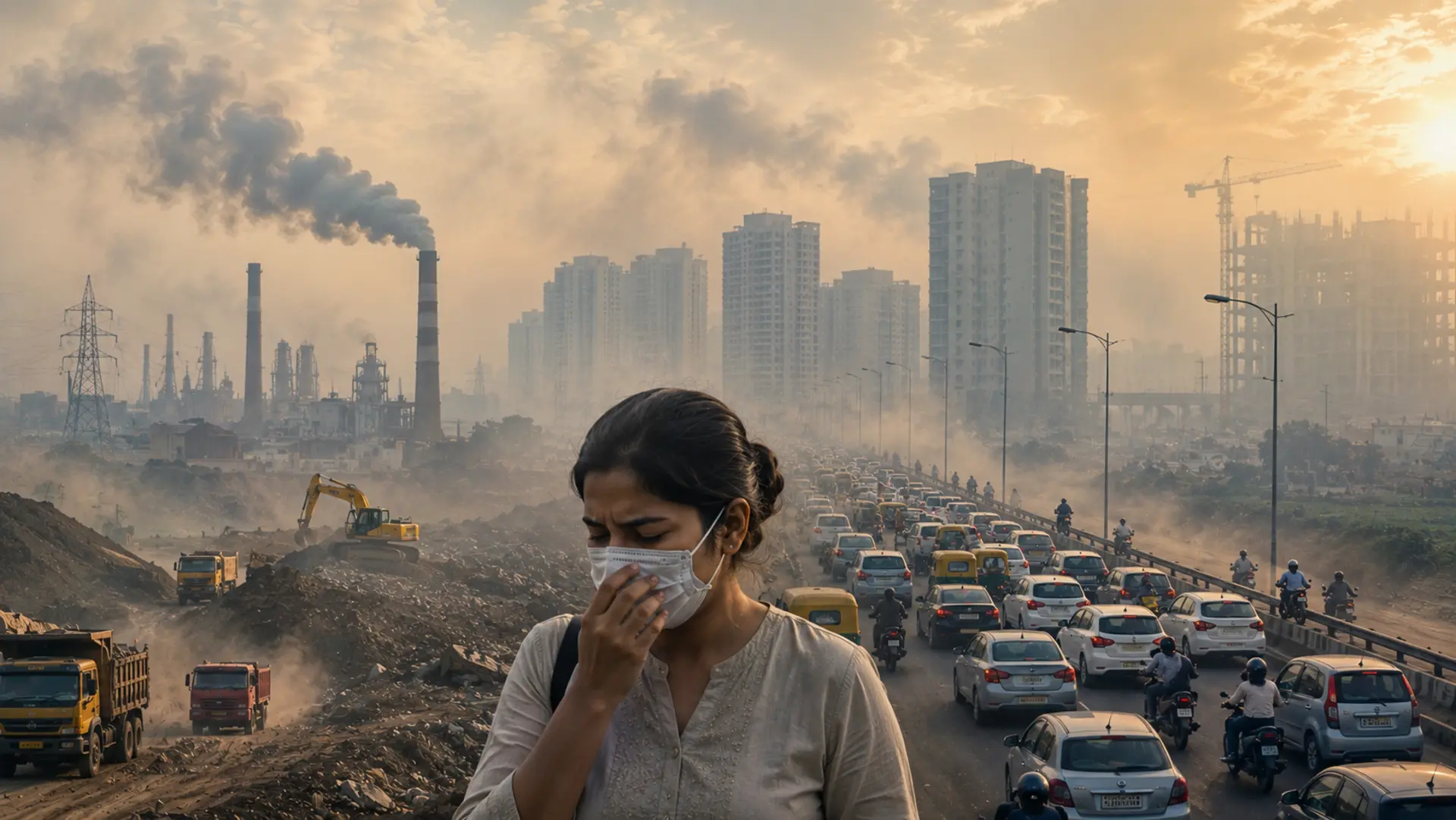
Haryana remained one of India's biggest pollution hotspots in May 2026, with four locations featuring among the country's 10 most polluted air quality monitoring stations. According to an analysis by the Centre for Research on Energy and Clean Air (CREA), Charkhi Dadri recorded the highest average PM2.5 level in the country, while Panchgaon in Manesar, Jind and Faridabad also ranked among the worst.
Data from the Central Pollution Control Board's Continuous Ambient Air Quality Monitoring Stations showed Charkhi Dadri recorded an average PM2.5 concentration of 99 micrograms per cubic metre during May—almost four times higher than the World Health Organization's recommended safe limit.
Experts attribute the district's poor air quality to mining and quarrying operations, stone-crushing units, dust storms and heavy truck movement.
Panchgaon in Gurugram district ranked third nationally with an average PM2.5 level of 85 µg/m³, driven by construction activity, mining and dust emissions. Jind and Faridabad also repeatedly appeared in the top 10 list, highlighting that Haryana's pollution challenge extends well beyond the winter months.
Faridabad failed to record even a single "good" air quality day throughout May. The city logged eight satisfactory days, 20 moderate days and three poor days, reflecting the persistent pollution burden faced by residents.
CREA's analysis also found that 12 monitored locations across Haryana fell in the moderate pollution category, while one was classified as poor based on monthly PM2.5 averages.
At the national level, Aizawl emerged as the cleanest city, while Delhi remained the most polluted state capital. Environmental experts say Haryana's continued dominance in pollution rankings underlines the need for a long-term strategy targeting industrial emissions, construction dust, mining activity and transport-related pollution instead of seasonal measures alone.

Staff@THS
 Staff@THS
 Staff@THS
 Staff@THS